
Steve Bannon spoke at length on Saturday’s WarRoom about what he describes as a growing domestic terrorism threat in the United States, linking it to broader cultural and online radicalization. Speaking in the aftermath of Charlie Kirk’s assassination, Bannon framed the event as a wake-up call and a rallying point for conservative Americans. He emphasized that radicalized groups, including antifa, left-wing activists, and what he calls "deep state” actors, are actively promoting violence and attempting to inspire further attacks online.
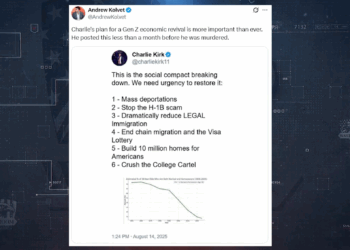
Bannon repeatedly invoked Kirk’s final messages, presenting them as a call to dismantle radical organizations and protect the nation. He outlined a strategy using the full power of law enforcement under President Trump’s leadership, including legal action, financial sanctions, and, if necessary, removal of dangerous actors from society. Bannon framed the movement as morally justified and resilient, stressing that opponents aim to instill fear but will face accountability. He praised Erica Kirk and the team surrounding her husband’s legacy, portraying them as capable custodians of Kirk’s institutional mission.
Mark Mitchell, appearing alongside Bannon, focused on the radicalization of youth. He described a confluence of cultural and digital factors driving young people toward extremist views. Platforms like Reddit, Discord, Roblox, and BlueSky were highlighted as environments where teens encounter anti-conservative messaging, transgressive content, and ideologically driven manipulation. Mitchell argued that moderators and educators in some institutions facilitate exposure to harmful material, while teenagers, curious and impressionable, are particularly vulnerable. He advocated for reforms in schools and oversight of digital platforms to reduce the influence of these radicalizing forces, framing the issue as both educational and technological in nature.
Quick Clip:
Mark Mitchell: I Think The Country We're Gonna Wake Up To On Monday Morning Is Gonna Be Very Different @honestpollster pic.twitter.com/TnbemzmKg6
— Bannon’s WarRoom (@Bannons_WarRoom) September 13, 2025
Bannon played footage of Michael Savage, who expressed deep skepticism regarding official accounts and media reporting of the Kirk assassination. They questioned the sequence of events, the handling of weapons, and law enforcement briefings, suggesting inconsistencies and incomplete disclosure. This perspective reinforced their broader narrative of institutional failure and the need for independent scrutiny of radical networks and online platforms. Bannon portrayed these gaps as evidence that the movement must remain vigilant and that relying solely on existing authorities is insufficient.
Michael Savage On The Assassination Of Charlie Kirk: “Something Is Wrong With This Whole F****** Picture”
Throughout the discussion, several key themes emerged: the need for a conservative resurgence, the threat posed by radicalized actors, the importance of youth engagement and education, and the necessity of maintaining persistent vigilance and strategic action. Both Bannon and Mitchell emphasized that these challenges are systemic, spanning cultural institutions, online platforms, and political organizations. They urged supporters to be organized, proactive, and informed, while maintaining focus on lawful methods to counter perceived threats.
The footage also highlighted a sense of urgency and momentum within the conservative movement. Bannon’s framing of Kirk’s assassination, combined with accounts of online radicalization, was intended to galvanize supporters and emphasize the stakes of cultural and political engagement. By linking domestic concerns to broader narratives of ideological struggle and online influence, the discussion painted a picture of a movement under pressure but committed to achieving its objectives.
Bannon also framed the events in the U.K. as part of a worldwide populist surge, linking massive street rallies with the ongoing conservative resurgence in the United States. He highlighted figures such as Tommy Robinson and Nigel Farage, presenting them as examples of citizens reclaiming their nations and cultural identity. According to Bannon, this momentum crosses the Atlantic, reinforcing a U.S. conservative wave and aligning with Charlie Kirk’s mission—a mission now being carried forward by Erica Kirk and the team he built around him.
Bannon is calling out what he sees as threats to national sovereignty and traditional values. He targeted the "deep state,” left-wing activists like antifa, radical educators accused of indoctrinating youth, and establishment Republicans he portrays as traitors. Mass mobilizations were not merely political spectacles but demonstrations of moral clarity and grassroots legitimacy. With flags waving and streets packed with passionate participants, Bannon painted these rallies as tangible proof that citizens are ready to defend their countries and values.
He framed the movement as both urgent and empowered, emphasizing that ordinary people, when organized and committed, can reclaim control over cultural and political institutions.
In summary, Bannon and his allies, like Mitchell Stephen Miller, presented a comprehensive argument that domestic radicalization is a critical threat to the country, particularly to conservative values and youth development. They called for decisive, lawful action under President Trump’s leadership, emphasizing accountability for extremist actors, vigilance in education and digital spaces, and continued mobilization of supporters. While critics may question the framing and tone of these remarks, the interviews serve as a clear articulation of a strategy aimed at consolidating conservative momentum, confronting perceived threats, and preserving the legacy of influential figures like Charlie Kirk.
For more context, watch the whole Saturday WarRoom segments: