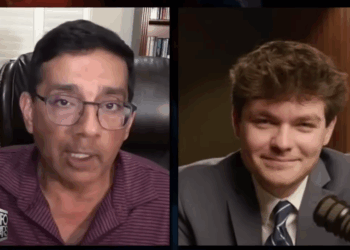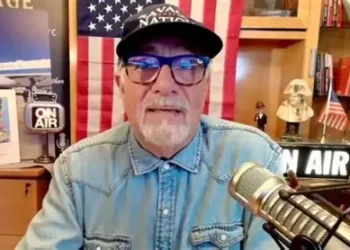

Steve Bannon and Free Beacon journalist Aaron Sibarium raised urgent questions about both the handling of accused assassin Tyler Robinson’s legal rights and the FBI’s probe into eerie online chatter foreshadowing Charlie Kirk’s death. Bannon first highlights two fronts of concern: Utah’s courtroom process and a disturbing subculture of radicalized online communities that appear comfortable with violent rhetoric against political opponents.
QUICK CLIPS:
FBI Investigating Social Media Accounts That Appeared To Indicate Foreknowledge of Kirk Assassination @aaronsibarium pic.twitter.com/RuuQr655Mi
— Bannon’s WarRoom (@Bannons_WarRoom) September 16, 2025
Robinson Held Without Counsel
Bannon blasted Utah officials for what he called procedural failures. Robinson, accused of murdering conservative activist Charlie Kirk, has reportedly been in custody for four days without speaking to a lawyer. Bannon questioned why his parents failed to secure private counsel, instead leaving Utah taxpayers to cover a public defender in a potential death penalty case. He also slammed state officials for weak courthouse security, arguing Utah should have asserted control and protected the integrity of proceedings immediately.
This critique frames Robinson’s detention not only as a legal matter but also as a test of state competence and transparency in a politically explosive case.
FBI Probing Online "Foreknowledge”
The conversation then pivoted to Sibarium’s reporting. He revealed that the FBI is investigating at least seven social media accounts that posted cryptic and hostile messages in the days leading up to Kirk’s killing. Some posts specifically referenced September 10, the day of the shooting, and others contained chilling statements like, "Watch the news tomorrow.”
While some messages may be coincidental or attention-seeking, their number and tone triggered FBI scrutiny. Several accounts were linked to radical LGBT subcultures, including one that followed Robinson’s roommate on TikTok. Sibarium emphasized that while nothing is conclusively proven, the proximity of these groups to Robinson is alarming enough for federal investigators to dig deeper.
A Culture of Radicalization
Sibarium argued that even if none of the posts are directly connected to Robinson, they reveal a larger cultural sickness. Online spaces—particularly niche LGBT and far-left groups—are increasingly normalizing violent fantasies about political opponents. He referenced the "Zysians,” a transgender rationalist cult linked to multiple violent crimes, as an example of how fringe digital subcultures can incubate real-world violence.
For Bannon, this reporting underscored what he described as the "scripted” feel of the Kirk assassination and the public’s skepticism. He suggested that Americans aren’t buying official explanations and that investigative journalism is essential to exposing deeper networks that may have influenced or celebrated Kirk’s murder.
Why This Matters
The Bannon–Sibarium discussion shines a light on two converging crises: a justice system struggling to handle a politically charged capital case transparently, and a digital ecosystem where violent rhetoric and extremist subcultures thrive unchecked. Robinson’s lack of legal representation raises due process alarms, while the FBI’s investigation into online foreknowledge exposes the growing risk posed by radicalized internet communities.
The Kirk assassination is no longer just a courtroom drama—it’s a flashpoint in the cultural and political battle over violence, free speech, and accountability in America’s fractured society.
For more context, watch this entire interview from Tuesday’s WarRoom: